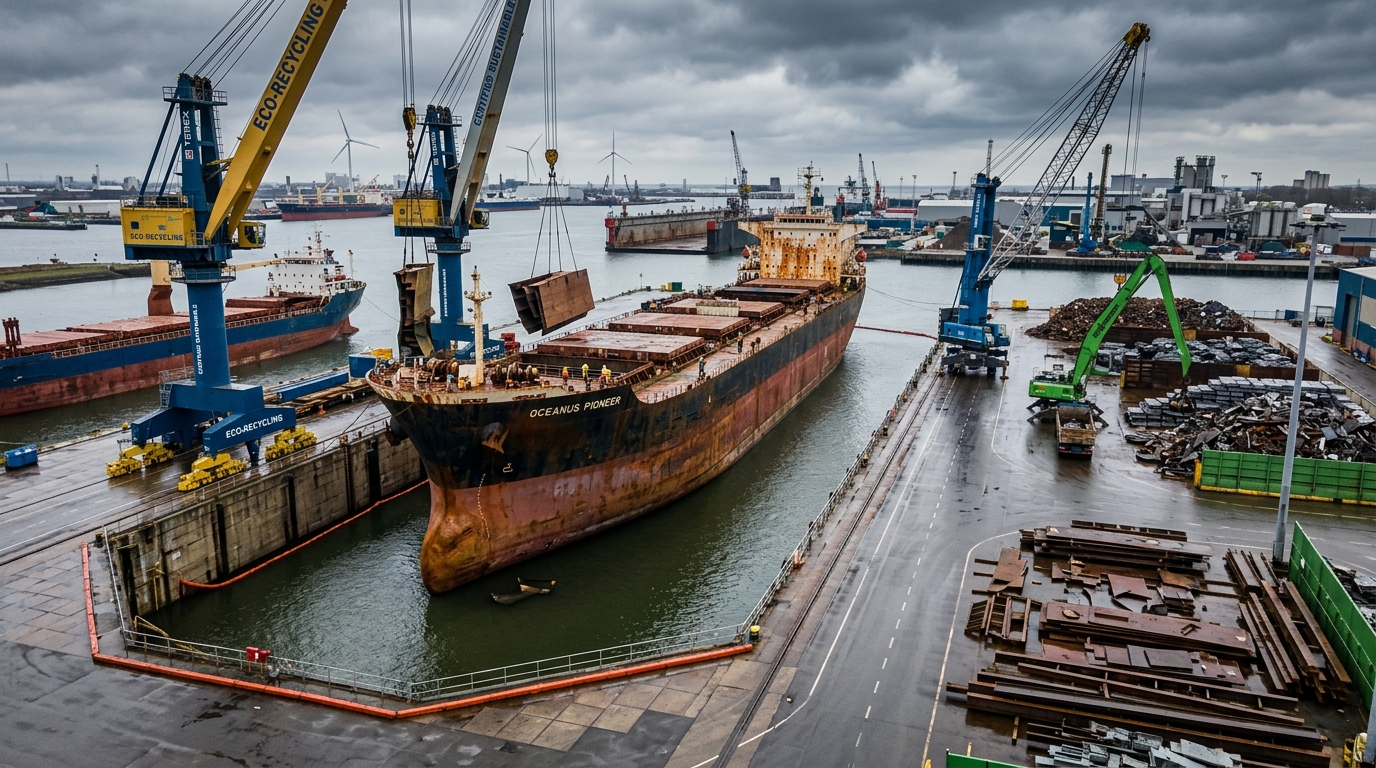
Which Ships Are Most Likely to Be Scrapped Next: the 2026 Demolition Watch List

Which ships are most likely to go to the breakers next? TrustedDocks scores every vessel in its database against seven demolition signals and keeps a live list of the candidates. This is what the current scoring says about the fleet as a whole, without naming individual ships: the per-vessel list is on the scrapping forecast page.
7,200 ships on the watch list, 1,900 of them high risk
As of the June 2026 scoring run, 7,202 vessels carry a scrapping score. The model rates 5,296 of them as moderate risk and 1,906 as high or very high, meaning the signals that historically precede a sale for demolition are stacking up. The average high-risk ship is 44 years old; the average across the whole watch list is 40. For comparison, the vessel types on the list were on average scrapped at between 23 and 35 years over the last decade, so most of this fleet is already sailing well past the age at which its sisters left service.
Age is the loudest signal, but not the only one
The watch list is heavily weighted to the oldest hulls. Almost no ship under 25 years scores as high risk; above 35 years, one in three does.
| Age band | Ships scored | High or very high risk | Share |
|---|---|---|---|
| 20 to 24 years | 153 | 1 | 1% |
| 25 to 29 years | 689 | 103 | 15% |
| 30 to 34 years | 1,309 | 248 | 19% |
| 35 years and older | 5,051 | 1,554 | 31% |
The model does not stop at age. The most common factors on high-risk ships, in order of how often they fire, are:
- Approaching the fifth or sixth special survey (4,556 ships). The 25- and 30-year surveys are the classic decision points: steel renewal and a full class programme against a residual value that may not cover them.
- AIS dark for an extended period (3,299 ships). A hull that has stopped transmitting is often laid up, detained or already sold for parts.
- Older than the average scrapping age for its type (over 6,800 factor hits across types). The thresholds are type-specific: 23 years for tugs, 29 for offshore vessels, 33 for chemical tankers, 34 for general cargo ships, 35 for fishing vessels.
- Sisters and similar ships already scrapped (470 ships with five or more comparable hulls demolished). When a design's cohort starts going, the rest tends to follow within a few years.
By vessel type: general cargo and tugs lead the queue
| Vessel type | On watch list | High risk | Average age | Type's typical scrapping age |
|---|---|---|---|---|
| General cargo ships | 1,844 | 436 | 41 | 34 |
| Tugs | 1,273 | 336 | 38 | 23 |
| Fishing vessels | 949 | 235 | 42 | 35 |
| Oil and chemical tankers | 673 | 197 | 40 | 33 |
| Offshore vessels | 597 | 201 | 45 | 29 |
| Service ships | 466 | 190 | 45 | 31 |
| Bulk carriers | 443 | 103 | 34 | 30 |
| Passenger ships | 411 | (see note) |
Two readings stand out. Tugs on the watch list are running fifteen years past the age at which tugs are usually broken up, a sign of how long small workboats are kept going in secondary markets. And the tanker line is the one with commercial consequences beyond recycling: 197 high-risk oil and chemical tankers, average age 40, is a description of the shadow fleet, and its eventual demolition will be a compliance event as much as a scrapping one.
Note: passenger vessels are scored but the age and risk figures for that class are dominated by small ferries and are not shown here.
By flag
High-risk tonnage clusters under a small number of flags. Russia (214 ships across its two flag spellings in the source data), Indonesia (90), Guam (65), Panama (63), Japan (58), China (39), Turkey (37) and St Kitts and Nevis (31) account for the bulk of the high-risk list. The Russian and St Kitts figures again reflect the sanctioned trades; the Indonesian and Japanese figures reflect large domestic fleets of old coastal tonnage that rarely trade internationally.
What it means for the repair market
A ship on the high-risk list is, almost by definition, a ship whose owner is weighing a survey drydocking against a demolition sale. That is the decision our docking forecast is built to anticipate, and it is why we publish the two together: the scrapping score tells you which special surveys may never be booked, and the forecast tells you when the rest will be. Yards competing for older tonnage should expect the high-risk cohort to thin out over the next 24 months, and to lose the fifth-survey jobs first.
Method
- Scope: 7,202 vessels flagged by at least one demolition signal in the TrustedDocks fleet database; scoring run of 27 June 2026, recalculated periodically.
- Signals: age against the type's historical scrapping age, proximity to the fifth or sixth special survey, owner history, scrapped sister ships, scrapped similar ships, the demolition rate of the vessel's age-and-type cohort, and AIS silence. Each contributes to a total score; risk levels are bands on that score.
- Not a prediction of any individual sale. The score ranks likelihood; the per-vessel list with the factors behind each score is on the scrapping forecast page, and the recycling facility directory lists the yards that will take the steel.